PBA Students Win National Hackathon with Innovative Computer Interface
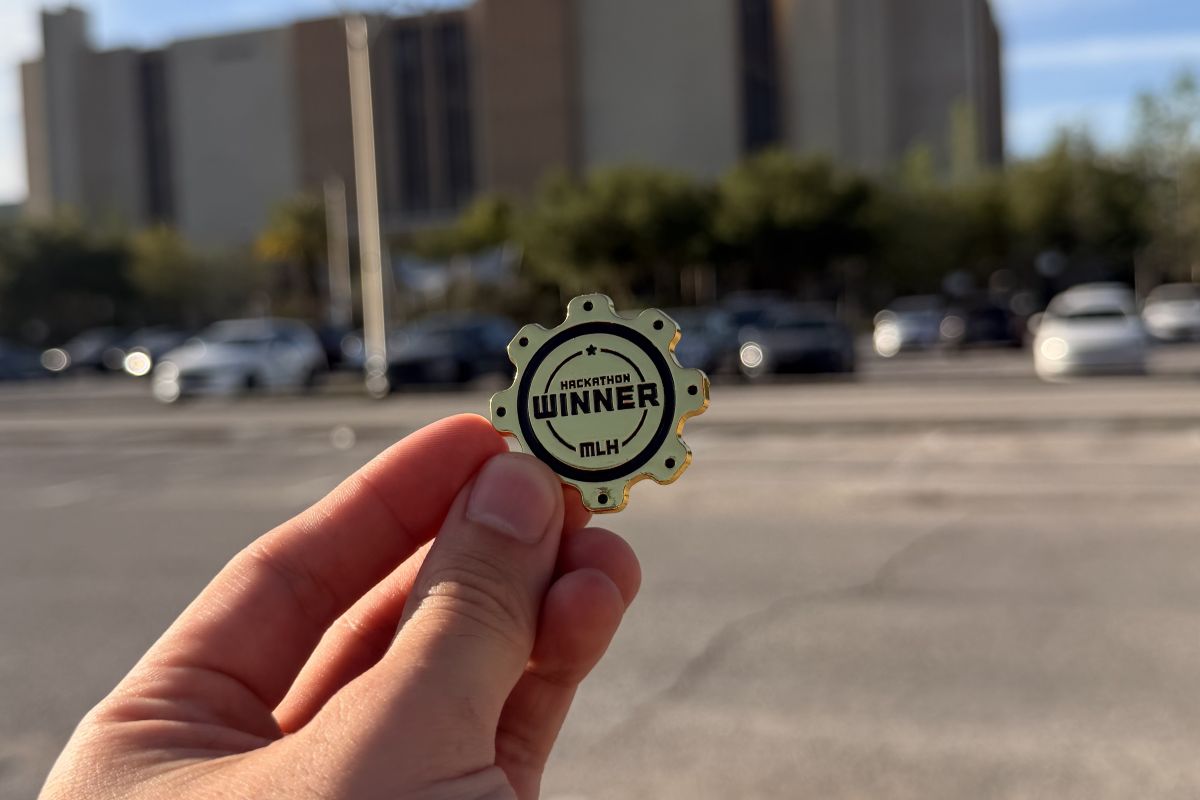
Palm Beach Atlantic University (PBA) students have made history by becoming the first from PBA to win a nationally recognized hackathon, showcasing innovation, technical skill, and creativity on a competitive national stage.
Computer science students Ethan Lawson and Jacob Potantus and computer engineering student Dio Silveira earned first place at HackaBull, the University of South Florida’s (USF) flagship hackathon and the largest in the Tampa area. The event, officially sanctioned by Major League Hacking (MLH), brought together nearly 200 participants across 58 teams for a 24-hour competition that included undergraduate, graduate, and doctoral students.
Competing on a National Stage
USF’s HackaBull is part of a global network of collegiate hackathons recognized at the same level as flagship events hosted by institutions such as MIT, Stanford, and Carnegie Mellon. The competition featured students from a wide range of academic levels and institutions, making the achievement especially significant.
The judging panel consisted of software engineers and professionals from leading companies including Microsoft, Apple, Tesla, Meta, GitHub, JP Morgan Chase, Bank of America, and Whatnot, alongside faculty from the USF.
Building Innovation in 24 Hours
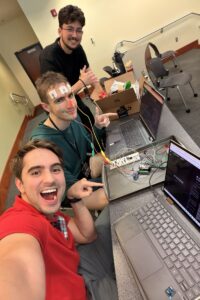
During the 24-hour competition, the team developed an advanced project named PEPPER — a brain-computer interface headset designed to read and respond to a user’s cognitive state in real time.
Built from raw components, PEPPER uses a custom analog signal-conditioning circuit to capture brainwave activity. The system incorporates instrumentation amplification, band-pass filtering, and microcontroller-based sampling to process signals, which are then interpreted using artificial intelligence.
Based on the user’s mental state, the system adapts the digital environment to improve focus, reduce stress, and enhance productivity. “When the wearer is focused, the system protects that focus. When they are stressed, it intervenes. When attention drifts, it helps recover missed information,” the team explained.
The team also developed detailed documentation outlining the hardware signal chain and system architecture, which is further detailed in the PEPPER Display Card.
Meet the Team Behind the Project

Ethan Lawson, a junior computer science major with a minor in psychology, contributed to the project by developing the backend architecture and AI pipeline. His work focused on building a multi-agent system to process and interpret real-time EEG data, enabling the system to respond dynamically to users’ cognitive states.

Dio Silveira, PBA’s first engineering graduate and the School of Liberal Arts and Sciences outstanding graduate of the class of 2026, designed and built the analog signal-processing system that powers the headset. His work focused on capturing and refining brainwave signals to ensure accurate data could be interpreted by the system.

Jacob Potantus, a senior computer science student and Farish scholarship recipient, developed the front-end interface of PEPPER. Using technologies such as React, Next.js, and Three.js, he created an interactive platform that visualizes brainwave data and enhances user experience.
Real-World Impact and Future Potential
The project represents a working prototype of technology that could shape the future of human-computer interaction. Innovations like PEPPER demonstrate how artificial intelligence and neurotechnology may become increasingly integrated into everyday life.
Built entirely within the time constraints of the competition, the project highlights both the technical skill and creativity of the students involved.
A Milestone for PBA
This achievement marks a significant milestone for PBA’s computer science and computer engineering programs, highlighting the University’s growing presence in competitive technical fields.
“This is an unprecedented moment for PBA,” the team shared. “We had the opportunity to represent our University on a national stage and demonstrate what students here are capable of building.”
The success of this team not only brings recognition to PBA, but also serves as an inspiration for other students to pursue innovation and excellence in their own work.
Looking Ahead
Following their success, the team plans to further showcase the project and its impact. Potential next steps include displaying the PEPPER prototype on campus and sharing the team’s story through the University’s platforms and outreach efforts.
As PBA continues to grow its computer science and computer engineering programs, achievements like this demonstrate the potential of its students to compete — and win — at the highest levels.
Learn more about PBA’s computer science and engineering programs.