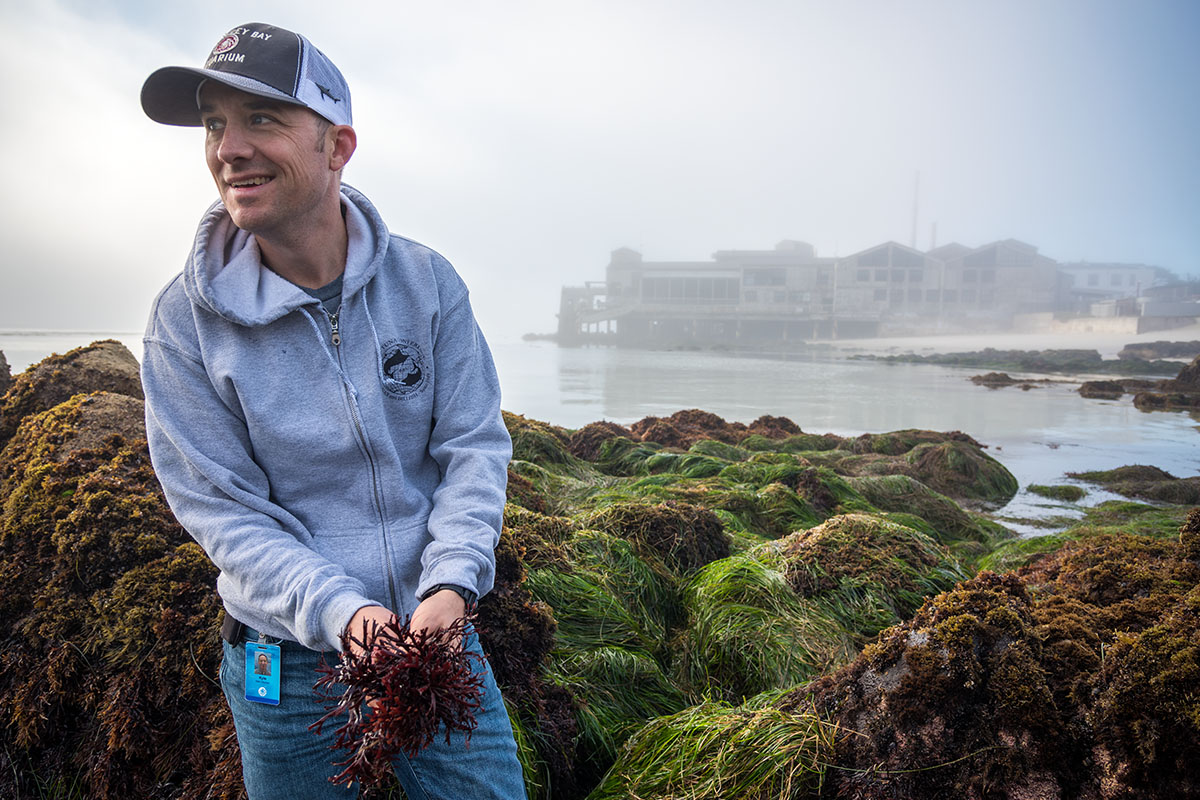
Dr. Kyle Van Houtan, a visiting assistant professor of biology at Palm Beach Atlantic University (PBA), is working on a conservation project involving the notorious bluefin tuna. His research has stemmed not only from the apparent need for regulation with this species, but also from his personal passion for conservation.
Van Houtan earned a Ph.D. from Duke University in Ecology, and he was theologically trained there as well. His educational interests have continued into his work in conservation science, and he serves as an ordained deacon at Family Church in Palm Beach Gardens, Florida.
His professional career in conservation science has led him to hold many notable roles. He has worked in leadership at the Monterey Bay Aquarium, and he helped lead a sea turtle project in Hawaii with the National Oceanic and Atmospheric Administration. His dedication to his work has led to great success in the field and has been honored with the Presidential Early Career Award for Scientists and Engineers from President Barack Obama for his work on sea turtle conservation.
Research Rooted in Passion
His current work is of special interest as he works with one of the most lucrative items in the food industry, bluefin tuna. Bluefin tuna is a luxury fish used almost exclusively for high-value sushi. The demand for the fish, along with the monetary incentivization for fisherman, has greatly increased its popularity over the years. According to a CNN article from January of 2026, the most recent catch of a 535 pound bluefin tuna hit record sales at a total of $3.2 million.
While Van Houtan notes that many of these practices can be done sustainably, the profitability of the fish has put it at severe risk for overfishing. He explains that bluefin tuna have no regard for the administrative boundaries over land and sea that we operate under, especially when considering the high seas where there is little jurisdiction. To create a solution, many countries have come together and signed a treaty called the International Commission for the Conservation of All Tunas (ICCAT) which, based on historical data and other factors, helps estimate and then regulate the catch allotment for nations.
His concern for the species led him and his team to dive deep into the data, making sure that estimation tools show an accurate representation of all the possible, vetted, and recorded data. Van Houtan and his team ended up presenting in September of 2025 in Madrid, Spain, at the ICCAT annual meeting. Their presentation, titled “Incorporating High Quality Historical Survey Data Into the Contemporary Atlantic Stock Assessment,” deals with bringing light to the inaccurate estimates when considering bluefin tuna conservation, due to the lack of inclusion of older data that they found in their research.
Improving the Data
One of the largest inconsistencies that Van Houtan discussed was the missing data in the estimate that ICCAT has been using. “One of the lead international scientists, a man named Frank Mather, who’s based at Woods Hole Oceanographic Institute in Massachusetts, wrote a letter to Congress in 1961,” Van Houtan explained. “He was afraid that the Atlantic bluefin tuna population was going to go extinct because it was overexploited–thirteen years before their official data sets even started.”
With the inclusion of the earlier data, it is projected that the estimates on the population decline would look vastly different, changing the catch allotment that each nation is allowed. In their research, Van Houtan and his team found data dating back to the 1930s. Their presentation let ICCAT know that as they continue to verify this data, it will be released. The ultimate hope is that it leads to ICCAT revaluating their estimates, taking into account the full population decline that has been recorded of bluefin tuna.
The research that Van Houtan has been engaged in clearly demonstrates the passion that he has for conservation as he continues to advocate for accuracy in the protection of bluefin tuna. However, he expressed that much of his work as a professor is equally as impactful as he pours into the next generation of scientists and innovators. He hopes his students continue to grow in their understanding of their God-given calling to steward the earth paired with their passion for science.
To learn more about PBA’s biology program, visit https://www.pba.edu/academics/schools/liberal-arts-sciences/.