
Overview
|
|
Why Study Mathematical Economics at PBA?
The combination of Mathematics and Economics gives students the opportunity to apply quantitative methods to develop economic models, analyze complex data, and solve real-world business and financial challenges.
Designed for students with strong analytical skills, this interdisciplinary degree combines mathematics, economics, and business to prepare graduates for careers requiring data-driven decision-making and strategic thinking.
- Christ-Centered Learning: Study mathematics and economics through a faith-based perspective that emphasizes ethical leadership and responsible decision-making.
- Interdisciplinary Curriculum: Build expertise across mathematics, economics, and business while developing advanced quantitative skills.
- Career Preparation: Learn to analyze market trends, develop economic models, and solve complex business problems using mathematical techniques.
- Hands-On Learning: Gain practical experience through internships, research opportunities, and real-world applications.


What You'll Learn
Students in the Mathematical Economics program develop the ability to:
- Apply mathematical techniques to economic analysis
- Develop quantitative models for business and financial decision-making
- Analyze economic data using statistical methods
- Solve complex analytical problems
- Communicate economic and mathematical concepts effectively
Program Details
Mathematical Economics combines the analytical rigor of mathematics with the practical applications of economics and business. Students develop quantitative, statistical, and problem-solving skills that prepare them for careers in finance, economics, consulting, data analysis, and graduate study.
PBA offers a variety of courses that students can choose from within this program. Take a look at what you’ll be learning while working toward your degree.
Students can customize their academic experience through elective coursework, minors, and additional majors that align with their academic and career goals. Explore the opportunities available at PBA.
Mathematics students benefit from collaborative classrooms, computer laboratories, and technology resources that support problem-solving, research, and computational learning.
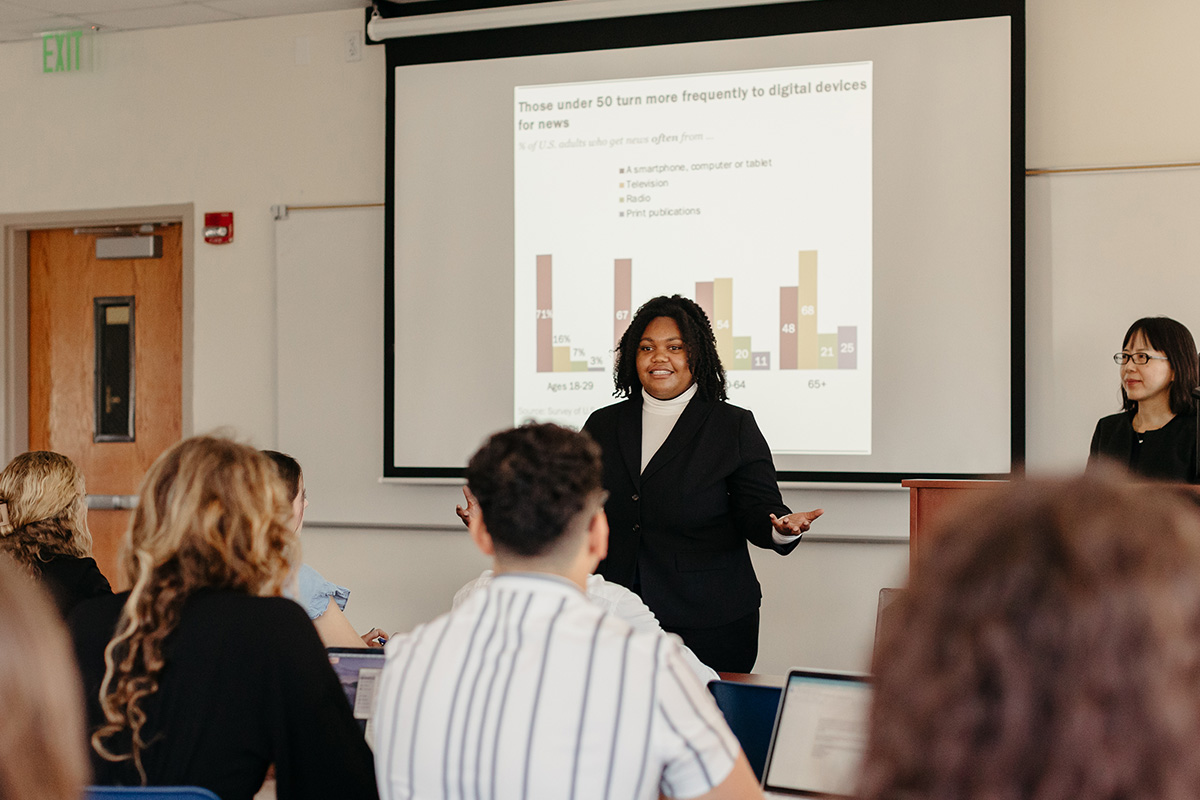
Learn from dedicated faculty members who bring a combination of academic expertise, professional experience, and a commitment to student success. Through mentorship, hands-on learning opportunities, and personalized guidance, PBA professors help students develop the knowledge, skills, and confidence needed to achieve their academic and career goals.
Mathematical Economics students strengthen their analytical and quantitative skills through research, internships, and experiential learning opportunities. Students apply mathematical models and economic theory to real-world business challenges while preparing for careers in finance, consulting, economics, and data analysis.
Entry Requirements
- Completed application
- Official high school transcripts
- Additional admissions materials as required
Visit the Office of Admissions website for current application, scholarship, and financial aid deadlines.
Career Outcomes
Mathematical Economics graduates combine strong quantitative, analytical, and economic reasoning skills that prepare them for careers in business, finance, consulting, research, and public policy. Their interdisciplinary background provides a competitive advantage in industries that rely on data-driven decision-making and economic analysis.
Potential career paths include:
- Economist
- Financial Analyst
- Data Analyst
- Business Consultant
- Investment Analyst
- Market Research Analyst
- Operations Research Analyst
- Actuary
Related Articles
What Can You Do With a Math Degree?
Student Stories
Mathematical Economics students gain valuable experience through analytical coursework, collaborative learning, leadership opportunities, and interdisciplinary problem-solving. These experiences help students develop the quantitative reasoning, communication, and leadership skills needed for careers in economics, business, finance, and related fields.
Joel Anderson: Leading Through Mathematics and Faith
Watch Joel Anderson’s story below to learn how studying Mathematics and Secondary Education at PBA helped prepare him for a future in teaching and leadership. Inspired by outstanding educators and supported by faculty mentors, Joel developed both his academic skills and his faith while serving in campus leadership and worship ministry.
Financial Aid
PBA’s robust scholarship program awards over $3 million every year. Invest in your learning with major-specific scholarships and other financial aid opportunities, which are awarded to 97% of our undergraduate students. Explore the resources below to learn more about tuition, financial aid, and scholarship opportunities.