I grew up in a very Irish Catholic household just outside of Boston. My mother’s side of the family was proper, teaching etiquette to a little blonde-haired, blue-eyed girl who was almost always wearing dresses. My father’s side was quite the opposite. My father was from Texas, with a family history tied to Cherokee ancestry.
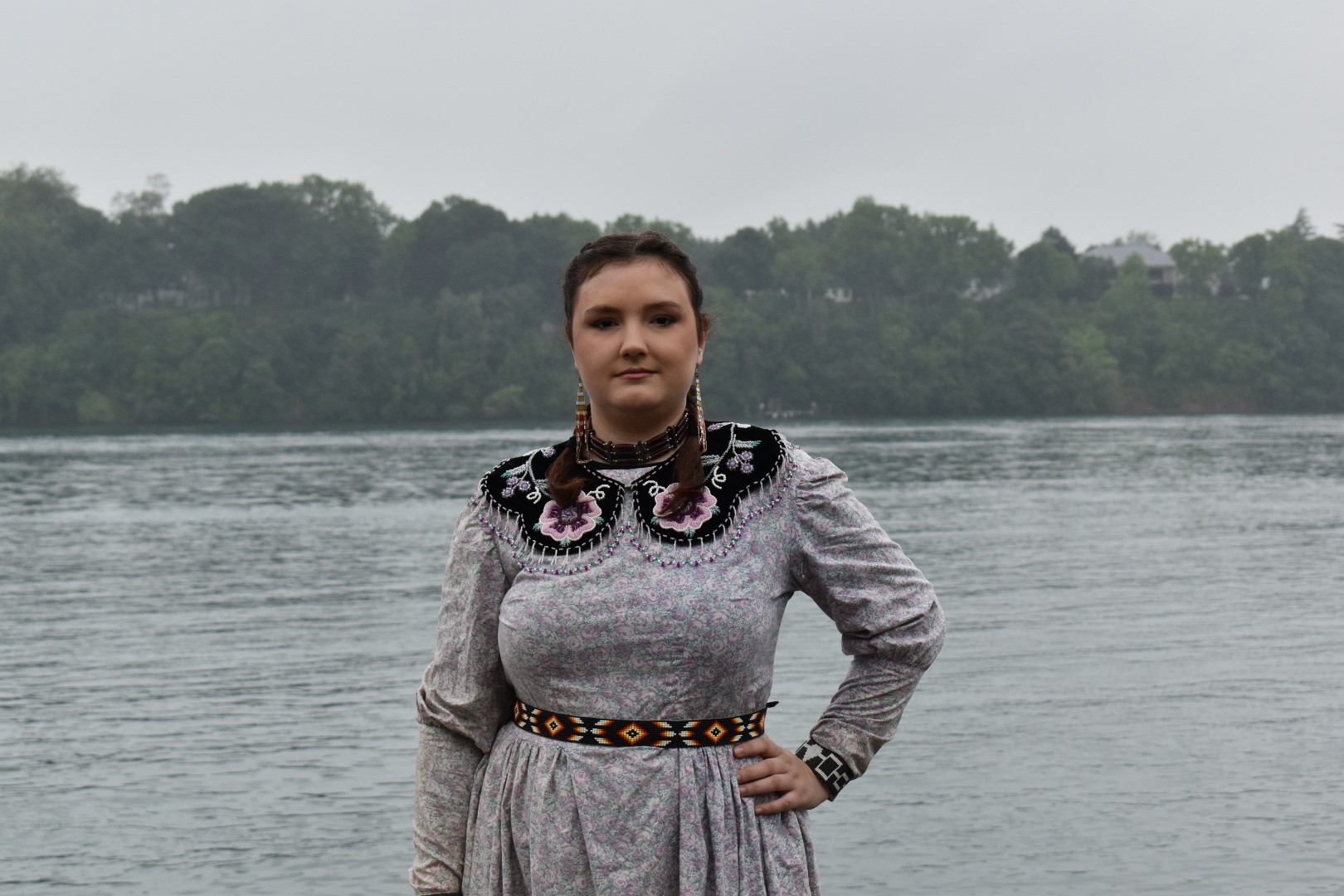
When I was small, my father would take me to local powwows, where we admired beautiful regalia and celebrated Native American cultures by watching traditional dances, exploring local crafts, and learning about the histories of different tribes.
My father would sometimes get questions or comments about the little blue-eyed girl accompanying him. As a child, I noticed that I looked different from many of my playmates and the people I met at the powwows. I had grown up with stories and images of Pocahontas, Sacagawea, and Geronimo, and I wondered where a little girl with blonde hair and blue eyes fit into that picture. I even started wearing scarves and hats to cover my hair.
Despite my insecurities, I remember being welcomed, and I loved experiencing the colors, history, traditions, beadwork, feathers, and crafts. I learned to love and appreciate this part of my cultural heritage—and, as I grew older, to miss its presence in my daily life.
Growing up near Boston, I remember learning about the Pilgrims and European settlement in school and visiting Plymouth and other historic sites. Native Americans were certainly part of the story, but I often remember their history being represented by a small plaque or brief description. In high school, I read accounts of the Trail of Tears and walked out of the classroom thinking about the atrocities and suffering I had just read about. It was difficult to learn about that history without feeling a sense of outrage and sadness.
Since moving to Florida, Native American culture has not been as visible in my daily life, but teaching environmental and marine science at PBA has reminded me how important our local cultural and environmental history is in understanding the landscapes we see today. I learn and teach about the Calusa people of Florida, whose influence can still be seen in archaeological sites along our coastline. I am fascinated by their extensive use of coastal resources and their sophisticated construction of canals, shell works, watercourts, and other management techniques for Florida’s coastal landscape. Their history reminds us that people have been interacting with, depending upon, and shaping these environments for centuries. When I travel through the Everglades and South Florida, I am also reminded of the continued presence of the Miccosukee and Seminole peoples and their connection to the region.
Cultural heritage is a funny thing, and it can be deeply personal and unique to each individual. My family did not grow up on a reservation, nor did I grow up identifying solely as Native American. But I consider Native American ancestry part of my unique cultural heritage and an important part of the person I am today.
Indigenous history in North America includes tremendous beauty, knowledge, resilience, and cultural richness, but it also carries painful histories of displacement, violence, and loss. Importantly, Native American cultures are not simply part of our past; Native nations and communities continue to preserve and celebrate their cultures, languages, traditions, and identities today.
I will always carry my cultural heritage with me and feel a connection to the Cherokee ancestry in my family, while recognizing that ancestry is different from lived tribal identity or citizenship.
During Native American Heritage Month, I hope we can all take time to learn about and appreciate the Indigenous peoples who lived on and knew this land long before many of our families arrived, while also recognizing the Native communities who continue to call it home today. Their histories are part of the history of the places where we live, and their knowledge, stories, cultures, and enduring connection to the land deserve our respect and remembrance.
Dr. Rachel J. Harris is an Assistant Professor of Biology and Oceanography at Palm Beach Atlantic University (PBA), specializing in coastal and estuarine ecology with a focus on habitat dynamics and environmental stressors. Dr. Harris’s research examines how environmental stressors—including eutrophication, contamination, and water quality degradation—affect the structure and function of critical coastal habitats. Her applied research has included extensive work in South Florida, where she investigated seagrass health and water quality in the Jupiter region and contributed to sponge restoration efforts in the Florida Keys.