Palm Beach Atlantic University’s (PBA) chemistry program was invited to publish its research in the Journal of the American Chemical Society, widely regarded as the leading journal in the chemistry field.
“If we publish there, with God’s favor, it will be the first contribution from PBA as far as I know,” said PBA Assistant Professor of Chemistry Dr. Alain Puente Santiago.
PBA’s chemistry program helps students understand the nature of the physical world through a Christ-centered perspective. It also prepares students for their careers by providing them with a strong foundation, hands-on experience, and research opportunities.
One of the research opportunities is electrochemistry, which Dr. Santiago describes as essential to modern technology.
“My electrochemistry research focuses on understanding and controlling electron-transfer processes at interfaces,” Santiago said. “These processes are fundamental to technologies such as energy conversion, catalysis, and sensing. By studying them at molecular and nanoscale levels, we can develop better ways to design and control these important chemical reactions.”
Santiago has over 12 years of research experience in electrochemistry and (bio)nanomaterials. He leads the Energy Nanomaterials Lab, which combines electrochemistry and artificial intelligence to develop advanced energy nanomaterials and improve catalytic reactions for sustainable energy technologies.
Inspiring the Next Generation in Research
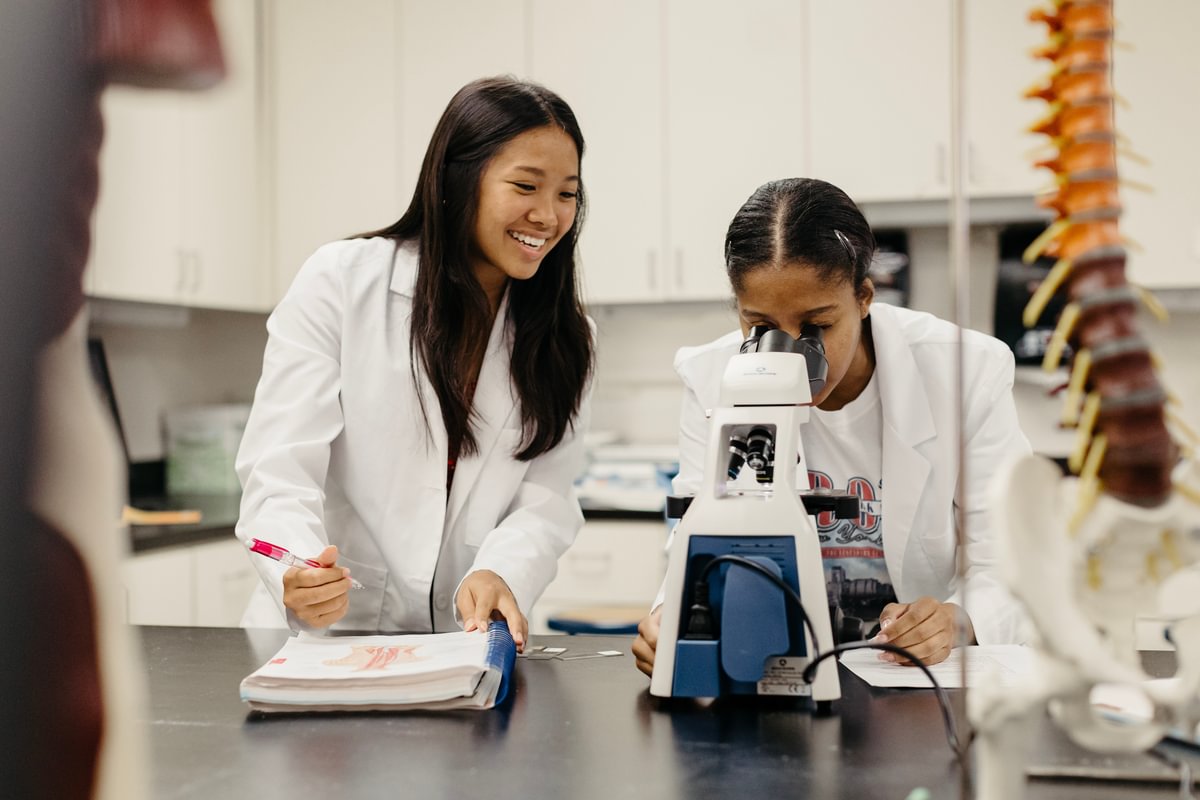
PBA students are actively involved in developing the research program. They learn electrochemical principles and techniques, prepare materials for future experiments, study scientific literature, contribute to perspective articles, and develop their scientific writing and critical-thinking skills. Beginning next semester, the group plans to initiate experimental measurements and further integrate hands-on laboratory research with these activities.
“My goal is for students to experience the entire research process and to see themselves as scientists who can make meaningful contributions to the energy field,” Santiago said.
He believes the experience with modern electrochemical techniques, nanomaterials, data analysis, and scientific communication will be an asset to the students in their careers.
“These experiences help prepare them for graduate school, professional careers, and research,” Santiago said. “For PBA, this work is also helping establish a vibrant research program in electrochemistry and energy-related materials.”
Since joining PBA, Santiago has seen a growing interest in electrochemistry research at the university.
“Students have become increasingly interested in joining laboratory projects and learning electrochemical techniques,” said Santiago. “I now have 10 undergraduate students in my group. I am also developing collaborations across disciplines and with different American universities, which is helping create a stronger and more visible research culture at PBA.”
To learn more about PBA’s chemistry program, click here.